


At the end of their exertions, even the reliable team of neoliberal apparatchiks assembled by Premier Danielle Smith’s favourite economist last June couldn’t come up with a “scenario” in which Alberta separation could be made to look like a good idea.

The final report on the cost of Alberta separating from Canada by the “independent advisory panel” hand-picked for the government by economist Jack Mintz of the University of Calgary’s School of Public Policy, The Economic and Fiscal Implications of Alberta Separation, was handed yesterday to a friendly journalist to spin as a “bombshell report,” and published on the government’s website.
Well, at least that got most of the talk about the significance of the NDP by-election victory in the Conservatives’ traditional Calgary-Shaw stronghold off the metaphorical front page.
It turns out that short of smoking banana peels it’s nigh on impossible to come up with a projection of how separation could be anything but an expensive disaster. This turned out to be true even for a group of people ideologically predisposed to thinking the best economic course forward for Canada would be to become as much as possible as the United States short of actually becoming the 51st state.
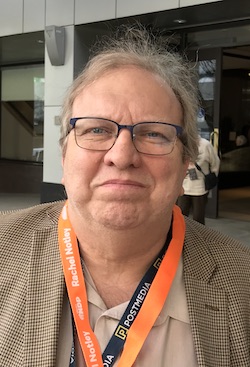
“These numbers are real ugly,” was the way Postmedia political columnist Rick Bell put it in his report yesterday, which sort of doubled as the government’s real press release.
“Up to five years after separation the GDP, the overall economy, would be down by about 10 per cent compared to no separation,” Mr. Bell wrote. “In the short term, a typical worker would earn almost $5,500 a year less than if Alberta had not separated. The government deficit could be … gulp … almost $26 billion in a year.” (Translation: Sorry, friends and allies in the separatist movement, but we just can’t make this work.)
And never mind the deficits. Debt would balloon as well – possibly soaring more than $400 billion as the new landlocked statelet took on its share of Canada’s debt.
The Gang of Five – long-time UCP advisor Dr. Mintz; U.S. resident and former Alberta Finance Minister Ted Morton; Business Council of Alberta President Adam Legge; Cenovus Energy Inc. Board Chair Alex Pourbaix; and former UCP “Blue Ribbon Panel” chair Janice MacKinnon* – tried two approaches.
Their report proffered what they called “a ‘smooth’ scenario in which negotiations with Canada are quick and favourable to Alberta,” and “a ‘difficult’ scenario in which negotiations are protracted and unfavourable to Alberta.”
Said the government’s press release: “In both scenarios, the independent report shows the short-term impacts of potential separation would result in significant economic disruption and costs for Albertans. The report outlines that the cost of establishing a new country could range from $50 billion to $170 billion in the first five years following separation. These costs are in addition to impacts on economic growth and Alberta’s fiscal position…”
It’s appropriate that the panel chose a term derived from the theatre to describe its two projections, both surely far too optimistic.

The “smooth” scenario is pure political science fiction, a pipedream that sounds as if it were written by the same screenwriter who came up with separatist leader Keith Wilson’s naïve and utterly unserious “transition plan” for an independent Alberta.
The “difficult” scenario is unlikely to be as difficult as real life would turn out to be if Alberta set about breaking up Canada with a predatory United States salivating on the sidelines.
The panel provided no “realistic” scenario, such as the estimates by economist Jim Stanford and former Alberta Government finance official Lennie Kaplan, both of whom concluded separately that Alberta separation would cost something more in the order of $300 billion, followed by years of multi-billion-dollar costs.
Nor is there a “catastrophic” scenario – and, remember, that $400-billion transition cost estimate Premier Smith herself blurted out last spring came from somewhere too.
“There is certainly a scenario where Alberta’s economy and finances could be better after separation, once a transition period is over,” the report said. Perhaps that was a face-saver for Dr. Mintz, in case anyone remembered that back in 2018 he wrote in The Financial Post about how “Alberta has better reasons to Albexit than Britain did for Brexit.”

However, the report goes on to admit, “there is also a scenario where Alberta’s economy could be weaker and its finances much worse, not just immediately but for many years to come.”
“The panel concurs that separation results in short run economic costs for Alberta for uncertain net benefits in the longer run,” Dr. Mintz was quoted saying in the government press release. “However, we also stress that Canadians should be aware that Alberta’s separation will undoubtedly harm Canada as well.” Canadians are well aware of that, of course, one reason why the possibility of a “smooth scenario” is zero.
Meanwhile, whatever Premier Smith had hoped to do, it sounds as if her cabinet has decided for her.
“The panel’s assessment emphasizes that both the scenarios outlined in the report highlight how costly it would be for Alberta to separate from Canada in the short term and also highlight the substantial amount of uncertainty Alberta would face in the long term,” Finance Minister Jason Nixon said yesterday in a terse response to the panel’s report. “Alberta’s government has always been clear: we support a strong and sovereign Alberta within a united Canada, and that is what we will continue fighting for each day.”
If this indicates the cabinet’s true direction, it will not improve how Premier Smith is perceived by the UCP’s separatist base.
Nevertheless, Albertans will still have to vote in Ms. Smith’s divisive separation referendum on Oct. 19, as well as the nine noxious referenda described recently by Canadian Senator Paula Simons as “disingenuous, malicious referendum questions, push-poll riddles, designed to incite social division and undermine confidence in the courts and the country.”
Should Ms. Smith decide to move on for any reason, Mr. Nixon would presumably be a strong contender to replace her.
A new poll released yesterday by the Angus Reid Institute shows that Premier Smith is strongly disapproved of by more voters than any other Canadian premier.
While Ms. Smith’s overall approval rating is unchanged from the last quarter, the pollster said in a news release, “a majority of Albertans (56%) say they disapprove of her performance, including 43 per cent who strongly do so, the highest such level of strong disapproval in the country.”
*More background information on the panel is found in this June 13 AlbertaPolitics.ca post.
The UCP and Danielle Smith opened up this can of worms. It was a very big and very costly mistake to do so. Another issue that still lingers is that the separatists in the UCP haven’t come forward, yet it is known that they exist in the party. Besides this, there is sketchy behavior with this separation referendum, from how it is handled, how the process of it is done, the way that it is worded, and what the results will be and who they favour. Danielle Smith has a very difficult road ahead. If the separatists aren’t happy, and don’t get what they want, they will attend the UCP’s AGM and remove her, by voting her out. For the patriotic Canadians in Alberta, who clearly aren’t too happy, if they don’t get what they want, they will send Danielle Smith and the UCP a strong message, and remove them from holding power in Alberta. Regardless of what these pundits say, there is no benefits to Alberta separating from Canada. Danielle Smith’s approval rating is slipping further. The writing is on the wall for her. She will have to exit from politics, or she will be voted out.
I can tell you who the separatists are from watching Leg Assembly for years. It’s the MLAs who most often stand up to trash Canada, glaze the USA, and most importantly argue for benefits of separatist things like Alberta pension plan and Alberta police force. Stephan is separatist freak number one, followed by Getson, Hunter, Pitt, Yao, Wright.
Cyr, de Jonge, Ellis, Dreeshen, and McDougall are borderline IMO. Push comes to shove I think they would chicken out. Loewen doesn’t talk much but he did endorse the Free Alberta Strategy (so did Pitt and Stephan). Former Speaker Cooper also attended a Free Alberta Strategy meeting online, got in trouble for it.
Free Alberta Strategy of course being the separatist policy playbook cowritten by former MLA and current Premier’s chief of staff Rob Anderson which Smith has followed to the letter. Smith herself is a separatist because it would give her more power and control over Alberta. I truly believe she doesn’t believe in anything except disruption (similar to tech bros like Musk) and of course her own self interest.
I suppose after that embarrassing by election loss, Smith and the UCP needs a new distraction to keep us from dwelling on that too long. Although I’m not sure this makes those that are enabling separatist referendums look any better.
I suppose this is the Wylie E. Coyote moment, when the anything is possible message of some is challenged and we notice he has run off the cliff. Yes, Alberta may be fairly well off, well at least when energy resource prices are high, but setting up a country from scratch is also very expensive and difficult.
Beyond this are the fundamental problems of geography, Alberta would still be landlocked and uneasy relations with the rest of Canada would probably lead to us have to be even more dependant on the US.
I am sure the current US regime is well aware of and trying to exploit this for their own benefit. Past US leaders would have mostly kept away from destabilizing neighbours and close allies, but this one sees foreign affairs as just an extension of their domestic agenda and can’t seem to resist spreading even more chaos.
We don’t need this sort of division at this time, for both economic and political reasons. I suspect most Albertans already realize or are coming to realize this.
As usual Mintz doesn’ mintz words…Ha. BREXIT proves how stupid separatists really are, & Smith stirring her poisonous stinky separatist cauldron deflects Albertans from her incompetent destructive divisive actions. Albertans need to show tjheir contempt on 19th October & in the 2027 election.
More stupid games with stupid prizes.
I think your photo of Rick Bell is somewhat weird. The Postmedia lanyard is truly befitting, but where did the Rachel Notley – NDP one come from? Clearly Rick is a total UCP / Danielle Smith cheerleader / supporter so the wearing an NDP lanyard somehow does not fit in my mind.
It is also noted that perhaps Jason Nixon might fill Smith’s shoes when she is punted out. Would that be the same Jason Nixon who heartlessly cut AISH benefits and started a new program to kick people off disability benefits? Again, the UCP keeps going further and further down the wrong rabbit hole. We all thought Jason Kenney was the worst Premier we ever had, quickly to be followed by an even worse Danielle Smith, so what’s next will be even worse, if that is even possible.
OA: The photo was taken at the NDP annual general meeting in 2019. You had to wear the NDP lanyard to get in and all media did, just as I wore a Conservative lanyard at the Ottawa convention that chose Brian Mulroney as leader. In those days, BTW, some of the TV cameras were as big as automobiles, and were capable of killing a person if they ran over them. I digress. Yes, it is the same Jason Nixon, and he has other controversial aspects to his past that would resurface if he were to become leader. But unlike our current premier, he is both smart and his own person, he is charming when he chooses to be, and he is astute politically – astute enough to know that these refereda are pure idiocy and electoral poison for the UCP. From the perspective of Opposition parties, I think Mr. Nixon is the most dangerous person in the UCP cabinet and caucus. If he were to become leader, he could well turn out to be like Scott Moe in Saskatchewan, able to keep getting re-elected despite his history. I wouldn’t suggest underestimating him. DJC
In regards to Minister Nixon … 2 years ago I had an extensive discussion with a rural gentleman from Rimbey whilst our wives were in cardiac surgery.
He was, very much to my surprise, no fan of the clown party and his MLA in particular. Depending on where his acreage is located, his provincial representative is either Nixon or Dreeshan.
He did not go into the specific details of why, though I gathered it was health care related issues, resulting in him being vehemently anti-provincial conservative. Which leads me to wonder to just how popular those two miscreants really are. Where’s a Janet Brown poll when you are curious?
My way-back machine had Jason K heading for the PMO and Jason N annointed Alberta Premier…
I think Jason N (I am one of his constituents-where is Ty Lund when you need him??) is and has been thirsting for the premiership for a very very very long time.
As noted below… there are more than just one disgruntled constituent. We don’t seem to be able to put forward a better candidate.
So, how does anyone get this info through to the separatists? As I left Home Depot yesterday, the usual blue Alberta flags were waving beside the usual table with the usual three old men trying to lure in passing motorists. I don’t think they’re going to read this Alberta government report or any other financial assessment. They see anything that doesn’t support their cause as ‘fake news.’ My concern is what happens after the referendum when Question #10 receives a resounding ‘no’ from voters. One of the reasons we’re in this mess today is because these people are sore losers and upset that Mark Carney and the Liberals won the last federal election. They’re not going to be gracious in defeat. They don’t know how.
HH: This is why it’s important to get out the vote on referendum day, regardless of the bad intentions and idiocy of the government that implemented these non-citizen initiatives. DJC
To reinforce our host’s recommendation – I am working for Elections Alberta on the day of vote.
EA is predicting an 80 to 85% turnout. Mail in ballots requests were over 325 K as of Sept 8th, and we were asked to STRONGLY suggest to everyone of our acquaintance to get a mail in ballot.
We were told to bring 2 meals, snacks and water, and not expect to have time to eat after 4 pm.
Not a real doctor Mintz is reliably neocon for his taxpayer funded sinecures.
CX: I have one bone to pick with this argument, and that is that folks with doctorates in academic subjects are not “real doctors.” They are the real doctors, of course, and calling a physic a doctor and eventually inventing a difficult degree for them was an effort to improve the status of a trade based on guesswork with mixed results. This has probably improved the results physicians get over time and I don’t dispute their entitlement to use the term. Likewise, I recognize that all doctoral degrees are not created equal – beware of degrees with names like “Doctor of Business Administration” from institutions with no academic pedigree and sometimes no physical presence. But, as a general rule, a person holding a PhD from a reputable institution not yet laid to waste by neoliberal governments is a real doctor. The fact mere pollers nowadays describe themselves as barbers is probably the result of a similar process. DJC
I phrase it this way with MAGA type people because of the BS they pulled on Dr. Jill Biden while she was first lady.
CX: Ah yes, I recall that now. I should’ve known. I have heard the same thought expressed unironically right here in Alberta, usually with reference to economists who express view counter to MAGA orthodoxy. DJC
I’m sure that Smith when she first commissioned this report, on behalf of the Alberta tax payer, thought it would be a glowing report and she’d be blowing roses out of her derriere. I wonder, how’s that working for her now. I also wonder, how much the dream team charged Alberta tax payers for this report?
“… she’d be blowing roses out of her derriere.” By chance, would they have been red, white and blue?
Canada has a backwards economy, ranking somewhere between 35 and 50th in the Economic Complexity Index. Derpberta is far less complex than Canada as a whole, with the province ranking near the bottom in comparisons of Economic Complexity with the 50 US states and the other Canadian provinces. Low complexity is consistent with high income inequality. The status quo is a disgrace and it could only get worse if the Grifter-Yokels get their way. https://atlas.hks.harvard.edu/rankings/
“derived from the theatre”
In the theater, as in in everyday life, everyone has a specific role to play and in this specific piece of political theater the performances are Oscar worthy, i.e., the audience has been fooled and it will continue to be fooled/deceived/distracted, since that is what good theater is all about. [That is why, for example, Mark Carney acting in his role as central banker spoke freely about the necessity of “stranding” oil and gas assets, yet Mark Carney the Prime Minister is dead silent about leaving oil and gas assets in the ground and has in fact reversed course in order to satisfy the overarching neoliberal economic and social reality and in doing so, also conveniently satisfies oil and gas private equity interests and their lobbyists in Alberta.
Or, in the words of Kevin Warsh, “We stay in our lane,” Warsh said. “We’ll let people that do trade policy and fiscal policy stay in their lane too.””
In other words, everyone knows what their role is and there is little or no deviation from an already established script. The foregoing discussion and its conclusions applies to everyone, all the actors and role players, in a top down, rules based, hierarchical society, yet it is not exclusively restricted to such social arrangements.]
Therefore, the problems continue to be structural and institutional and the actors themselves are bound and constrained and their actions are both rewarded and reinforced by the current ossified structural and institutional framework and its operating system/rules. What you see is what you get, it is simply the existing order of things.
Finally, the Gang of Four is much preferred over the “The Gang of Five”:
Go1: And here I assumed you meant these guys: https://en.wikipedia.org/wiki/Gang_of_Four DJC
An apparent case of not that left hand, the other left hand. lol.
Confusion appears to be a commonality in both life and art. lol.:
This takes me back! Thanks!
What the UCP really wants, and has wanted from the very beginning, is to ignore federal legislation especially when it comes to the environment, to rip up the Canada Health Act and privatize health care, to get their grubby hands on pension funds and federal tax money, and to have their own police force and appoint their own judges so they would be immune from prosecution for breaking federal law. Because they work for mostly foreign-owned corporations, mainly in the oil and gas industry and in the private health insurance industry. This is what they call a sovereign Alberta within a united Canada. They know perfectly well separation is not only unnecessary but stupid. People opposed to the UCP have been trying to paint them as separatists; they are not. On the contrary, they are relishing the resistance to separatism because it makes their idea seem sensible, especially to people who believe for-profit corporations will save us, of which there are plenty in Alberta. This report is extremely convenient for the UCP. Unless the referendum descends into chaos, it will kill off the already struggling separatist gang, something which Danielle Smith will celebrate.
Brett Mckay has a good analysis of how the American Libertarian Atlas Network has infiltrated both the Alberta separatists and the UCP party
https://theijf.org/article/how-groups-tied-to-u-s-atlas-network-turned-a-fringe-separatist-movement-in-alberta-into-a-political-threat
There seems to be major discrepancies between the overview report and the detailed technical papers and appendices available on the School of Public Policy website. For example, the overview report claims there is a $15.5 billion gap between what Albertans pay to the federal government in taxes and what they receive back in services (p. 6). The technical paper on the fiscal balance calculates the fiscal gap to be only $2.3 billion. The technical paper further calculates that there is a net negative fiscal gap once the ongoing operating costs of setting up a new nation state are factored in (p. 9).
More convinced that what the UCP wants is the distraction of the Yes/No vote on remaining a part of Canada while the voting public ignores the other 9 questions and allows those who extol the racism inherent in some of those questions and particularly the question about getting lots of federal funds to be spent as the UCP decides rather than on, say, health care or education or other such silly endeavours.
That’s why we all need to say NO to the Noxious Nine. DJC
Likewise, Quinn Slobodian, a young (Canadian) historian currently at Boston University, has written extensively about what he calls “Crack Up Capitalism”. Weakening federalism can be seen as a modest step towards a province such as Alberta becoming a “zone” economy (like Dubai, Singapore, and several other tax havens-slash-privately operated cities and territories that now exist scattered across the globe).
The “Broligarchs” (at least Elon) are very keen on the idea of capitalism WITHOUT democracy. Governments are scaled down to a few essential services (police to ensure that we behave ourselves) and everything else is privatized and subject to direct corporate control
In my darker moments I suspect this is the kind of “statelet” the UCP aspires to. Alberta “sovereign” over its own economy, inside the shell of an increasingly loose federation that is still– nominally– a nation state.
Or, “good capitalists know the real game is capturing the existing state, not going through the hassle of creating a new one.”
See for example,
https://breachmedia.ca/mark-carneys-investment-summit-could-pave-the-way-to-a-corporate-carve-up-of-canada/
The “Dark Enlightenment” theories of Curtis Yarvin have strongly influenced the tech bros such as Musk, Theil and others. What it espouses is exactly what you suggest.
“capitalism WITHOUT democracy”. I wonder if they’ve thought that through.
There are extremist libertarians and anarchists and “sovereign citizens” who oppose any laws and all governments. But that is a completely irrational position.
From the very beginnings of humanity in East Africa over 300,000 years ago, our societies have always had laws and governments. What changes is who makes the laws, who enforces them, and who is bound by them.
In primitive Paleolithic hunter-gatherer societies, organized in extended family groupings, the “government” was the headman or matriarch, depending on the particular group structure. That person made the laws on division of labour, sharing of food and other essentials, relationships with other human groups, and who paired off with whom. Those laws weren’t codified, since writing hadn’t been invented yet, but they existed all the same. Enforcement was through banishment, or worse, usually at the hands of the leader or their acolytes.
Later, as human societies grew larger and more complex, laws were made by kings or tyrants, or by religious leaders, or by oligarchies such as the Roman Senate, or even by nascent democracies like the Athenian city-state — although even there, the franchise was limited to free adult men. They were enforced by agents of the state, whether civil or military or clerical. Enforcement was often brutally harsh, arbitrary, and unequally applied.
Today, we have laws determined through democratic processes in some countries, or through autocratic processes in others. In democratic systems, those laws include a system of enforcement through state agencies known as police, and are adjudicated through the courts. In most democracies, those laws — at least theoretically — apply equally to all citizens of the country.
Those laws include taxation, which pools the collective resources of society to fund the activities of the state, in all areas that are best conducted by the community as a whole rather than by individuals acting alone.
One of the fundamental ideological differences in society includes the scale and scope of activities funded through taxation, such as what activities are best handled by the state, and what are best left to individuals acting alone.
Corporations forget: they benefit just as much from democracy and the rule of law as do individuals. Without laws, what’s to stop me from walking into a grocery store, filling my shopping cart, and just walking out without paying? Without laws, what’s to stop a company’s supplier from taking their money and failing to ship product, or shipping poorer quantity or lesser quantities than was contracted for? Without laws, what’s to stop a company’s transport contractor from just selling the product itself and pocketing the revenues?
Every human society has laws. The question is, who makes them, to whom do they apply, and who enforces them. Democracy is just how we answer those questions. And taxation is how we pay for it.
The fact that right wingers are saying the truth about what kind of disaster this could be, says it all. I am sure that it is actually way worse than what they predict. Senator Paula Simons is correct about Danielle Smith MAGA objectives of disruption and chaos. That seems to be the only for sure objective these people live for. The UCP has to go before the damage is beyond repair and despite people disagreeing with me on what the NDP role will be, I think we are going to end up with another UCP government this time with a person that has no brain – Jason Nixon.
Don’t think the vote is all that surprising nor does it demonstrate the leader of the NDP is doing a great job or that the NDP will win the next provincial election. Give the list of “errors” made by Smith as listed in this blog, she just isn’t leadership material nor is she brightest right wing politician in the province.
Why Smith decided to go this route most likely has more to do with her vanity than good politics. She might want to consider meeting with the f.f. south of the border isn’t such a grand thing. Smith if she is concerned about the future of Alberta ought to step aside and having some one who knows what they are doing replace her as the party leader.
Miss Smith should be polishing up her resume, talk radio in Calgary will be calling her name once she has been removed from the UCP. Which way the vote goes on Oct 19th, who knows but who cares if separation is chosen we still need another vote after that, then the long battle begins with court challenges it will take at least 10 years by some estimates before it’s a done deal. By that time UCP has been voted out replaced by a either the NDP, or another form of conservative political party.