


Former Alberta Party leader Greg Clark is emerging as an effective opponent of the United Conservative Party’s plan to gerrymander Alberta electoral districts in a scheme to win the next general election in spite of growing voter disapproval.

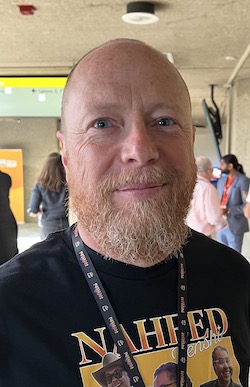
Mr. Clark, who served as Alberta Party MLA for Calgary-Elbow from 2015 to 2019, is ideally positioned for the role as a well-informed member of the 2025 Electoral Boundaries Commission, whose work was tossed out by the UCP last spring for being too fair, and because he is not associated with the Opposition NDP, so his objections cannot be dismissed as mere partisanship.
“Major changes to electoral boundaries mean the next battle is likely in court, and I don’t think anyone wants judges imposing new ridings,” Mr. Clark wrote on social media yesterday morning. “The govt can avoid this by implementing the majority maps from last spring, or simply adding two rural seats to that map.”
“In Canada, we don’t want elected officials drawing their own election maps,” he wrote as part of a thread on X last April soon after the UCP spiked the majority report of non-partisan Electoral Boundaries Commission, telegraphing the intention of the Danielle Smith Government to gerrymander urban and rural ridings to give itself an unfair edge in the next general election.
“Instead, governments give independent commissions the job of drawing maps that reflect population trends while also respecting the challenges of representing diverse, rural and remote communities,” Mr. Clark said in that post.
Well, the chances appear to be vanishingly small that the UCP will decide to do the right thing. While we won’t see the electoral maps ginned up by the UCP-stacked MLA electoral boundaries committee chaired by Leduc-Beaumont MLA and Chief Government Whip Brandon Lunty until Monday, it’s already becoming clear what we’re going to get.
“Some pretty wild takeaways from today’s electoral boundaries committee meeting,” NDP researcher and former journalist Trevor Scott Howell posted on Wednesday. “Lethbridge would be split into FOUR ridings instead of its current two urban ones,” he wrote. “Three would combine city neighbourhoods with surrounding rural areas.”
“Three urban-rural hybrid ridings are proposed along Calgary’s northwest and western edges. Springbank gets split up,” he said, noting that the committee cites golf courses as logical riding boundaries. “Okotoks and Diamond Valley would be split apart, with Diamond Valley paired with Banff. The panel’s dissenting members say public submissions overwhelmingly favoured keeping them together.”
Mr. Howell goes on to say Calgary and Edmonton ridings would average 7,000 more residents per MLA than ridings outside those cities, a 14-per-cent difference. This kind of urban-rurban-rural gerrymandering, the UCP reasoning obviously goes, should prevent any more unexpected urban embarrassments like the Sept. 14 by-election victory of the Alberta NDP in the usually dependably Conservative Calgary-Shaw riding.
There’s more, but that gives a strong indicator of what were likely to see on Nov. 2.
Observed University of Alberta law and economics professor Andrew Leach on X Wednesday: “If it turns out that Edmonton and Calgary residents are under-represented vs the rest of Alberta by 14% (# of residents per seat), that’s far larger than the degree to which Alberta residents are under-represented relative to Quebeckers in the House of Commons.”

For its part, though, the UCP strategic brain trust has obviously decided that it would have trouble winning another general election, but that’s not going to be a problem as long as they can get away with cheating.
A lot of Albertans – especially supporters of our MAGAfied provincial government – like to think of this province as Texas North. In reality, as I’ve often argued in this space, it’s closer to being a northern version of Oklahoma. Regardless, the UCP is obviously thinking, why not import Texas-style gerrymandering to win the 2027 election if they can’t win it honestly?
“UCP gives up on winning elections in Alberta,” wrote Deirdre Mitchell-MacLean in her Women of AB Poli Substack Wednesday. “That isn’t ‘strong and free,’ it’s weak and grasping.”
If the UCP proceeds with this scheme, it’s likely to quickly end up in court.
“This is Trump-style, MAGA-style gerrymandering,” Opposition NDP Leader Naheed Nenshi told a news conference on Wednesday. “We’ve never seen it in Canada before. And one of the reasons we haven’t seen it in Canada is because it’s probably unconstitutional.”
“We will absolutely take it to court,” Mr. Nenshi was quoted saying in a CBC story. “The Supreme Court, and various courts across Canada, have been really clear that U.S.-style gerrymandering is not constitutional in Canada.”
After the 2025 Electoral Boundaries Commission, led by retired Court of King’s Bench justice Dallas Miller, was established on March 25, 2025, it held more than 30 public hearings throughout Alberta, in person and online. It received close to 2,000 written submissions.
However, after supporting an interim report with a new electoral map, the two UCP-appointed members of the five-member commission came up with a minority report that would slice the province’s cities into pizza pies of “rurban” ridings, diluting the Opposition NDP’s vote.
The government then used that as an excuse to deep-six the commission’s majority report.
The three majority members of the 2025 Electoral Boundaries Commission warned that if the government were to implement the minority report, “it risks significant legal consequences by way of a court challenge that is likely to be successful. Even more importantly, it risks jeopardizing faith in Alberta democracy.”
It would be naïve, though, to imagine the UCP cares much about Albertans’ faith in democracy.
As Canadian-American conservative commentator and speech writer David Frum famously observed, “If conservatives become convinced that they cannot win democratically, they will not abandon conservatism. The will reject democracy.”