


One of the most disgraceful episodes of the COVID-19 pandemic in Alberta took place on April 18, 2020, when Devin Dreeshen, Jason Copping and Deena Hinshaw assured employees of Cargill Inc.’s meat packing plant in High River during a telephone town hall that their workplace was safe.

At the time, Mr. Dreeshen was the minister of agriculture and Mr. Copping was the minister of labour in the United Conservative Party Government of then-premier Jason Kenney. Dr. Hinshaw was Alberta’s supposedly independent chief medical officer of health, although as would later become clear she was under heavy pressure to be team player with the UCP government, which from the get-go had been ambivalent about how to respond to the worldwide pandemic as it swept into Alberta. Many of the workers in the plant were recent immigrants to Canada or temporary foreign workers. Some didn’t speak English.
Don’t be “distracted by misleading noise or inflammatory rhetoric,” Mr. Dreeshen told the workers. A government talking point at the time said, “the Cargill plant is completely safe” as far as Alberta Health Services and the government’s Occupational Health and Safety regulators were concerned.
The previous April Fool’s Day, appropriately enough, he had informed the Alberta Legislature that “under the advice of our chief medical officer, food processing facilities have implemented additional sanitation procedures to ensure that the safety of their workers and their inspectors is paramount.”
As if to add it was actually OK if the workers got sick, as long as the meat could pass inspection, Mr. Dreeshen responded to a friendly question from the UCP backbenches by adding, “COVID-19 is not a food borne illness.”
The first positive COVID case among the Cargill workforce was recorded on April 3. On April 6 there were several more. The same day the workers’ union, United Food and Commercial Workers Local 401, wrote the plant manager demanding more information and additional protections for workers.

By April 9 the virus was spreading rapidly with approximately 300 known cases at the large meatpacking plant about 60 kilometres south of Calgary.
On April 12, UFCW Local 401 President Tom Hesse demanded the company suspend operations until effective safety measures were put in place at the plant. Nothing happened.
Then came the April 18 telephone town hall with its dangerously reassuring messaging. Hours later, though, Dr. Hinshaw asked her officials to try to find out how many cases actually originated in the plant.
Within weeks, the infections had turned into what would become the largest outbreak in North America of the then-new respiratory illness. Nearly 1,000 Cargill employees at the plant would test positive for COVID, almost half the workforce.
Many became seriously ill. Two line workers from the plant would die – Bui Thi Hiep, 67, a 23-year Cargill veteran, and Benito Quesada, 51, a UFCW shop steward.
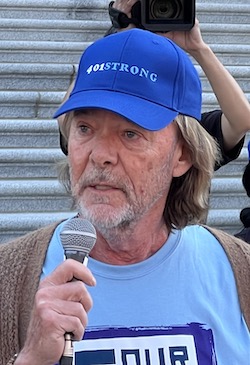
Many more among the workers’ families, friends and communities were infected – at least four more of whom died. About 25 had to be hospitalized. Epidemiologists would later link at least 22 other outbreaks — some in care homes where contacts of Cargill employees worked – to the outbreak.
A new report released this morning by the Edmonton-based Parkland Institute concludes that Alberta’s OHS regulator abdicated its mandate and deferred to AHS while AHS made recommendations without trying to ensure Cargill followed them, and that neither OHS nor AHS tried to enforce the company’s compliance.
“The response to the crisis was defined by a lack of preparedness, inaction, overconfidence, cultural stereotypes and racism, incompetence, and deliberate aversion to using available enforcement measures,” said the report, which is based on the first independent investigation of the situation.

The 199-page study by researchers Sean Tucker and Jason Foster – Essential and Expendable, How Alberta’s COVID-19 Response Failed Cargill Workers – shows how the outbreak spread thanks to “a political environment that openly and enthusiastically prioritized economic growth over the health and safety of a largely invisible and vulnerable group of workers, most of whom were immigrants and temporary foreign workers.”
Drawing on hundreds of pages of records obtained through freedom of information requests, the evidence shows there was nothing inevitable about the massive scale of the outbreak of the disease, concluded Dr. Tucker, a human management resource professor at the University of Regina, and Dr. Foster, a labour relations professor at Athabasca University and director of the Parkland Institute.
Even before the outbreak, it was obvious both the industry and the UCP government were determined to keep the plant operating, they said. “On March 17, Alberta’s minister of agriculture and forestry, Devin Dreeshen, gave assurances that the entire industry would be declared an ‘essential service,’” the researchers wrote. This designation had no basis in law
and Mr. Dreeshen’s department had no mandate to be involved in worker health and safety, yet it was so declared, “making these ‘essential industries’ exempt from any public health measures related to gathering sizes, physical distancing and, importantly, temporary closure orders.”

Meanwhile, resolved to keep the plant operating, Cargill offered $500 attendance bonuses and a temporary $2-per-hour pay increase. The report suggests this may have encouraged some employees who were sick to work anyway. It notes that many of the workers lacked alternative income sources, and that, as essential workers, they were ineligible for Ottawa’s Emergency Response Benefit.
Assuming that most transmission was taking place outside the plant, AHS and Alberta Government OHS staff “stood back waiting for positive cases or formal complaints from workers or the workers’ union before inspecting facilities,” the report said.
“Despite their inexperience and lack of expertise, and in absence of an epidemiological analysis, Hinshaw and other health leaders made public comments that projected confidence in their knowledge of where the virus was (and was not) spreading among Cargill workers,” it also said.
“At Cargill’s invitation, on April 7, AHS inspected the plant and made non-binding recommendations related to carpooling, masking, use of barriers, and other items.”
When Mr. Hesse made his April 12 call, the report recounted, “Cargill said that it was complying with all public health guidance, and closure was unnecessary. The next day, though, the company cut one of the plant’s two shifts due to staffing shortages.”

On April 15, the notorious 30-minute “virtual inspection” of the plant by a provincial OHS officer took place in response to a UFCW demand. “The officer did not evaluate all areas of the plant or assess compliance in terms of OHS regulations relevant to biological hazards, nor did they speak directly with front-line workers,” says a summary document published this morning along with the full report. “Even though several hundred workers were ill, the inspection resulted in no compliance orders.”
The report’s authors concluded: “OHS performed reactive, substandard inspections, failing to enforce sections of the Act and Code that were obviously relevant to preventing worker exposure to an infectious disease.”
On April 19, the union held its own town hall with 600 worried Cargill workers. “At this meeting, the union reiterated its concerns about the plant’s safety and informed workers of their rights under the Occupational Health and Safety Act, including the right to refuse dangerous work,” the summary said. The same day, Bui Thi Hiep passed away in hospital.
Finally, on April 20, Cargill temporarily shut down the plant. It would reopen on May 3.
“We cannot fully explain why Alberta OHS abdicated its important responsibilities in response to the largest outbreak of COVID-19 in Canada,” Dr. Tucker and Dr. Foster wrote. “We can say that political pressure, deference to public health (authorities), negligence, and incompetence all contributed to the tragedy. Further evidence suggests that government officials prioritized the interests of the meat-processing industry over the health and safety of meat-packing workers. Whatever the causes, their inaction represents a clear case of industry capture and regulatory failure.”
Of the report’s 36 recommendations, five are highlighted by the authors, abbreviated below by me:
- AHS, OHS, and the government should all acknowledge and publicly apologize to Cargill’s workers and their families for the grave shortcomings of their response
- Alberta’s health agencies and OHS must adopt the precautionary principle when responding to new respiratory illnesses
- The government should amend the Public Health Act and the Occupational Health and Safety Act to make it clear that during a public health emergency OHS is responsible for leading the response in workplaces
- The Auditor General should undertake a comprehensive review of the internal processes, policies, and practices of OHS to determine what contributed to the regulatory failure before and during the outbreak
- The government should instruct the Alberta Labour Relations Board to create a standing list of essential services to clarify the rights of essential workers in future public health emergencies.
At the time Covidmania took off in Alberta there were 15 000 long-term care beds in Alberta, from an overall population of 4.4 million. 73% of Covid deaths occurred in that tiny 0.3% of the population. These two deaths are significant anomalies among people who tested positive for Covid, which begs the question as to what factors led to their demise when that outcome was so unlikely for people not in long-term care.
I may have missed attaching the video link to a previous comment. Sorry:
https://youtu.be/ahX27q83Nek?si=V1Yz2noJIpbjDa7x
Murphy:
I find your use of the sobriquet “Covidmania” to be repulsive and insulting. I’m a Registered Nurse, recently retired from Alberta Health Services, with a Master’s degree and specialization in Cardiovascular Nursing, and let me tell you, there was no such thing.
I still recall the horrifying images coming out of Europe, especially Italy, in the early weeks of the pandemic, as patient after patient after otherwise young, healthy patient went into acute respiratory failure, and the hospitals where they ran out of mechanical ventilators to support them.
I still recall the “reefer” trailers lining up in the parking lots of New York hospitals as their morgues filled to overflowing.
I still recall the terrifying stories of nurses, physicians, and other bedside healthcare care workers, afraid to go home to their families lest they pass this deadly virus on to them.
Then along came the first vaccine, developed in record time using a new vaccine technology never before used in clinical practice, and there was a glimmer of hope. It was horribly expensive, and required the installation of cryogenic storage facilities in public health centres around the province and the country, and it initially only arrived in dribs and drabs until large-volume production could really get going, but it was hope.
Meanwhile, the virus evolved, mutated, in a manner and with a speed not entirely dissimilar to that seen in the fictional novel and movie The Andromeda Strain. Its most susceptible population changed, from young healthy adults and youth to seniors, especially the frail and those with multiple co-morbidities. Its epidemiology also evolved, as it gained transmissibility while also declining in virulence.
Eventually, a significant portion of the population had been immunized, and the mortality and morbidity rates tapered off, although we never really saw it end because WE STOPPED LOOKING. But it is still out there, and people are still getting sick and even dying from it, and there are still people living with its aftermath in terms of their own health — i.e. “Long COVID”.
So, please stop talking like this. This was a horrible episode in our recent history, and you have no right to minimize its impact in that way.
jerrymacgp: I could not agree more, and the many variations of that virus are still in circulation. We lost a family member to Covid and one of our friends has been crippled by ‘long’ Covid.
Among your many important points is that we are no longer tracking Covid. It is typically human to ignore a danger which is common. Good examples are the opposition to seat belts or the insouciance of business when it comes to the occupational health and safety of their workers or the effects of their products on customers. In spite of the ongoing Covid infections, our public health people have been ordered to put their heads in the sand. Democracies are so seldom rational that it is a reason to despair.
Typo: “Eventually, a significant property of the population had been immunized” was supposed to read “significant proportion”. Drat.
Jerry: It’s been fixed in the original comment. DJC
I recall during the pandemic that The Murph (whether or not he/she/they are an actual person and not a bot is up for debate) was banned from here for a spell for spreading Covid disinformation. Why DJC let them back is a mystery to me.
Here we are committed to free speech, and that includes unpopular opinions. Sometimes the line between unpopular opinions and misinformation is clear, but I prefer where possible to let commenters say what they wish and let other commenters sort them out. I am also of the view that if I dish it out, I should be able to take it, so I am inclined to publish comments that criticize me commentary and arguments. That said, I do delete comments that are potentially defamatory or that have nothing to do with the issues of the day. That cannot be said of the remarks made by this commenter, who I am certain is a real person. DJC
Surely you mean Freedom of Expression? Which we, as Canadians, all know is not absolute and has its limits…
-FoF
Yet again we have nepo-baby Devin Dreeshen in the thick of it, with nothing but bravado in his words and actions. Jason Copping is not much better, as a lawyer, who kept his mouth shut, though it must have been clear that they needed to shut Cargill down then. (Copping is involved in the #CorruptCare scandal too, as we remember him and the almost breathless Danielle Smith making their announcement in a drug store, about their plan to purchase [Turkish] Tylenol.)
The premier and her minions have much to answer for and it’s good to read this important report now. Those who suffered as a consequence of the govt. inaction (attempted coverup?) need to see justice.
I guess it’s indicative of where we are as a society when looking at the players from that town hall. Dr. Hinshaw is no longer in her CMO position and long gone from any Alberta public health role. Mr. Dreeshen, on the other hand, continues as a minister in the UCP government. I’ll let you do your own research as to who is better qualified and competent.
Looks like dipstick Devin Dreeshen, now the Minister of Remove Speed Limits and lets see how many more we can Kill on Alberta Highways, loves to stick his drunken nose into whatever he can.
When she started, Dr. Hinshaw was well respected by all. This was until the UCP stuck their fingers where they do not belong and basically told her what to say. This along with all the other things demonstrates how useless the UCP really are.
Well put. Devin Dreeshen also wants to tear out bike lanes. It almost seems like he enjoys causing deaths.
And now we have a provincial referendum that targets the same workers. Tell me it’s a coincidence.
1. Do you support the government of Alberta taking increased control over immigration for the purposes of decreasing immigration to more sustainable levels, prioritizing economic migration and giving Albertans first priority on new employment opportunities?
2. Do you support the government of Alberta introducing a law mandating that only Canadian citizens, permanent residents and individuals with an Alberta-approved immigration status will be eligible for provincially funded programs, such as health care, education and other social services?
3. Assuming that all Canadian citizens and permanent residents continue to qualify for social support programs as they do now, do you support the government of Alberta introducing a law requiring all individuals with a non-permanent legal immigration status to reside in Alberta for at least 12 months before qualifying for any provincially funded social support programs?
4. Assuming that all Canadian citizens and permanent residents continue to qualify for public health care and education as they do now, do you support the government of Alberta charging a reasonable fee or premium to individuals with a non-permanent immigration status living in Alberta for their and their family’s use of the health care and education systems?
And now the premier of Alberta wants to charge $1900 to temporary residents to access healthcare. Did someone in the UCP brain trust decide that the cost of COVID-19 care and hospitalization for meat packing plant workers was too high?
“Is that $1,900 fee (Once? Yearly? Monthly? Per visit?) going to make or break your business? If it is, you’re probably hiring into a low-skill profession and we want those low-skill jobs to go to youth employment. We have a 15 to 16 per cent youth unemployment rate and we want those kids to get their first chance,” she told a meeting of the Calgary Chamber of Commerce.
https://www.ctvnews.ca/calgary/article/alberta-premier-suggests-1900-health-premium-for-temporary-residents/
Good luck getting high school kids who are Canadian citizens to work in the abattoirs after classes. I’m sure they’ll stick around if another deadly virus threatens their lives, what with all the safety. If they weren’t kept out of school by the UCP government, maybe they’d be too busy studying to become engineers, doctors and other professionals in order to avoid the plight of their parents. Oh wait, keeping them out of school is part of the plan too, right?
Tell me how this is going to work after Alberta’s severance from Canada and the mass exodus of Canadian citizens that is expected to ensure.
I think dumb dani has spent too much time with the mar a lago crowd
the questions look like they were written by one of those maga politicians
I find it almost unbelievable that those questions are being asked. This isn’t the U.S.A Its Canada. This is how the divide begins. To put those questions out in a referendum is disgusting. Given the questions being asked I’m not surprised about what happened at Cargill. I’m sure government politicians and their senior staff really didn’t care about the people, most of them were immigrants. guess smith and her crowd want to deter immigrants from staying and from arriving. Perhaps the Indigenous People of Alberta would like to hold a referendum, you know regarding all those european descent people who arrived uninvited and then proceeded to destroy our way of life.
might may for a nice human rights. complaint against smith and company. some times these types of questionnaires are simply racism/
Shameful! For this, and many other evolving shoddy, insensitive, non-transparent, racist, inhumane, corrupt, financially unwise, and many more reasons, is why the UCP need to be shown the door. Thanks again for this blog for exposing them yet again, for what they are. It all comes down to almighty money catering to big business, humanity be damned.
During Covidmania in Alberta 60% of deaths that made up the observed excess mortality were “Covid-related”, as in, people with a positive test. A quarter of that excess mortality was drug poisonings among productive-age males. Progs loves them some Covidmania so much that the data is meaningless to them. Isolating the sick, elderly in long-term care killed a great swatch of them, as over 70% of “Covid deaths” had at least three significant pre-existing comorbidities, were over age 70 and in long-term care. Lamenting insufficient lockdowns has to be the number one kookiest prof belief of all time.
Murphy: it follows from your numbers that 30% of Covid deaths were amongst nominally normal people. That is the public health issue. The initial view that Covid was not airborne meant that measures to keep air sheds fresh and clean were not promoted or mandated. Most of our medical establishment still does not recognize that N95 masks, effective air filtration, and higher standards of air exchange in buildings are effective preventatives. In the absence of those measures, vaccines, lockdowns, and avoidance have become the default standard as is the annual wave of colds and flues that follow the opening of the school year. That lets OHS and business off the hook for those costs.
Here is a video explaining the basic physics of how air filters, including N95 masks work.
Dear Murphy, and those of his ilk, There were never COVID lockdowns in Alberta or anywhere in Canada. No one concerned about public health has ever advocated for “lockdown,”
Ten of us seniors came down with Covid after having 4 shots and we know they saved our lives, yet we continued to have stupid comments hurled at us by these mindless fellow seniors.
Their favourite saying to prove how stupid they were” If you can still get Covid after getting the shot why did you bother to get them?”
Our answer “ Because all the idiots we knew who didn’t bother are dead”.
Alan K. Spiller: You and your friends and family members who are seniors, know what happened when modern medical technology didn’t exist. People died, including youngsters. The UCP does not care.
Or maybe the UCP has gone full Nazi, wanting the “unfit” to die.
Also, never trust someone who blathers about “co-morbidities” as if humans with more than one health issue are “unfit”.
Has Alberta come a long way since Pocklington/Gainers and the Cons? My hunch is that it is worse if that is possible.
Just another example, that Smith, The UPC and the Oligarchs don’t care about the health and well being of Albertans.
The report’s 36 recommendations will be ignored, and soon forgotten. There are no mechanisms in this so-called democracy for holding government officials to account.
There must be at least one class-action outfit ready to pursue legal machinations.
Rath & Co. perhaps???
And besides, intentional deaths caused by government malfeasance, will save health care expenses. So when will Alberta reduce tobacco taxes and the age to smoke and drink. How about it Danni, forget rehab too expensive! And forget fixing Calgary’s water lines – it isn’t fiscally prudent.
Alfredo Louro: Especially when anti science, anti medicine from the UCP and Danielle Smith is there. Danielle Smith didn’t even stop one of her own MLAs, from hosting anti-vaccine town halls, which were even advertised. Preston Manning was then gifted a very handsome sum of over $250,000 to create a Covid-19 pandemic report that had zero credibility, because he isn’t a doctor. The UCP did another pandemic management report that was just as costly, and equally flawed.
And the Cons are still beating that dead horse. Just this past summer, one backbench CPC MP from Ontario held an “inquiry” into “vaccine injuries”, in which the non-equivalence between ‘correlation’ and ‘causation’ appears not to have been mentioned. In their world, if you got hit by a car leaving an immunization clinic, that would be a “vaccine injury”.
https://www.ctvnews.ca/health/article/why-one-conservative-mps-push-to-probe-covid-19-vaccine-injuries-is-prompting-concern/
That comment is both the most accurate and the most disheartening.
This was totally avoidable – if we had a provincial government in Alberta, that wasn’t anti-science, anti-medicine, and anti-vaccine, like the UCP are. The UCP and Danielle Smith will either ignore the report, or pay Preston Manning, who has no medical credentials to “study this”, and pass the buck. Shameful!
Thank you David. As another commenter pointed out, this is shameful.
Kenney has to wear this one, but Smith’s ministers were involved so yes they probably would rather bury it.