


You’d think Danielle Smith, of all people, would have seen her government’s troubles with Artificial Intelligence data centres coming right up Highway 2.

After all, back in 2011 and 2012 when Ms. Smith was the still the new leader of the fledgling Wildrose Party, she ruthlessly exploited the Progressive Conservative Government’s plans to build multi-billion-dollar electrical power transmission line infrastructure through rural Alberta, a situation with many similarities to the United Conservative Party’s data centre fiasco today.
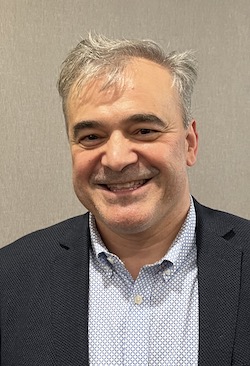
The night before last, flustered Technology Minister Nate Glubish was “jeered, badgered and booed,” as the Canadian Press reporter who attended described the scene at a packed town hall meeting in the Central Alberta town of Lacombe.
“Dozens of people lined up to ask questions, but none who made it to the microphone before the event ended offered an endorsement,” reporter Lisa Johnson dryly observed.
By some accounts, long-time Wildrose and Conservative political staffer and strategist Vitor Marciano grew irate as he tried to control the meeting, grumping as it ended that “there has been some misinformation here, but I’m not sure it’s coming from the stage.”
Outside, a data centre opponent gave an impromptu public seminar on the risks of the energy- and water-intensive technology wherever it shows up.
Regardless of what happened at a second town hall last night in Redwater, 50 kilometres north of Edmonton and close to the planned site of the massive Meta data centre in Sturgeon County, it’s clear concern about AI data centres runs deep among rural residents and members of the farm community, key parts of the UCP’s governing coalition.
Back in 2009, the PC Government of premier Ed Stemlach passed Bill 50, the Electric Statutes Amendment Act, allowing the cabinet to approve major electrical transmission projects without assessments or public hearings.
Picking up on the fear in rural Alberta that the government was about to trample on the property rights of landowners, the Wildrose Party jumped on the issue in the months leading up to the 2012 general election.
“We’ve heard loud and clear from Alberta ratepayers that they simply don’t believe that the plan for $14 billion or $16 billion worth of new transmission is what’s needed for the Alberta market,” Ms. Smith said in January 2012.
“We had a perfectly good process before, when we had consumer groups and landowner groups able to discuss what was being proposed,” she added, vowing to scrap Bill 50 and listen to landowners.

The PCs were gobsmacked by the reaction. Premier Stelmach decided he had had enough and resigned. And, were it not for a providential Lake of Fire bozo eruption, the Wildrose Party might well have cruised to victory over Mr. Stelmach’s successor, Alison Redford, in the spring election that year.
Wildrose MLA Rob Anderson – today Premier Smith’s separatist chief of staff – called the government’s arguments for the powerlines “political malarkey” and the policy “a travesty.”
Sometime Green Party leader Joe Anglin joined the fray, calling PC politicians “incompetent and dumber than your average monkey. I can’t tell you how many times I’ve caught them lying.” Earlier, he had caught the provincial energy regulator hiring private dicks to spy on landowners opposed to a power line – no doubt contributing to widespread rural distrust of the PCs on the issue. He was elected as a Wildrose MLA in April 2012.
In June this year, by the way, the Supreme Court of Canada ruled that Mr. Anglin’s civil claim against Alberta’s Chief Electoral Officer for interfering with his 2015 campaign as an Independent in Rimbey-Rocky Mountain House-Sundre could go ahead, so we are bound to hear more from him soon. But I digress.
In February 2012, with the Wildrose Party looking like a winner in the polls, the Sherwood Park News reported that Ms. Smith told residents of the bedroom community east of Edmonton that “if we form government, we will go back to the drawing board on all the lines proposed under Bill 50. We have committed to repealing Bill 50 and doing an independent needs assessment.”
“These decisions shouldn’t be made by politicians for political reasons, they should be made once the landowners, consumers and residential groups have had an opportunity to have some input into the hearings,” she told reporters that day. She warned that building unneeded multi-billion-dollar power lines would cause electricity rates to soar.
That, of course, was then. This is now. Although one does wonder how they could have failed to see the present brouhaha coming.
Evidence shows that the huge demand for power by AI data centres will have the same impact on power bills, despite claims by the government the centres will have to supply their own energy.
And about the only consultation with landowners and neighbours about the massive AI centres planned for Alberta are press releases announcing the projects and after-the-fact town halls like the ones in Lacombe and Redwater whose only goal is to get opponents to be quiet and stop bothering the government.
Of course, it was probably easier and more pleasant to listen to upset taxpayers and landowners when you were the leader of an upstart political party beloved by pollsters and journalists than it is when you’re the premier of a government who gets to jet off and hobnob with billionaires, presidents and princes in places like Mar-a-Lago and Dubai.
After all, you’ll get buttered up when you’ve got something they want, like a place to put an AI data centre, instead of jeered, badgered and booed by folks who will have to live with the consequences.
Apparently this phenomenon can impair a politician’s hearing.
The Unlimited Cow Patty Party strikes agin. Honey do git them thar tar and feathers and the split rail. And if you see seppie the Black Hat guy, we all have some Aboriginal folk who wish to discuss a number of matters with him.
Unlimited Cow Paddy Party, I think, that’s awesome.
https://youtu.be/oyHDMKoF_zI?si=javWt1xtDBVqMzUO
Yippee aye ay, Cow Dani!
Wildrose leader Danielle Smith isn’t the same as UCP leader and premier, Danielle Smith, except for two things. She has her own interests in mind, and she is so dishonest. To get whatever she wants, Danielle Smith will walk all over anyone, and betray even her staunchest supporters. These AI data centres are a literal nightmare for anyone who lives adjacent to them. The noise is so loud and unbearable. It doesn’t stop. Water issues have been a concern. The surrounding environment is put in harm’s way. Birds, bees, flora and fauna, all will be impacted. There is the matter of power prices soaring, as of we don’t contend with that enough as it is, due to the electricity deregulation fiasco from Ralph Klein, which at this point is likely over $40 billion. Not a whole lot of jobs. Why weren’t Albertans consulted in advance about these AI data centres? It’s like the coal mining on the Eastern Slopes of Alberta. The UCP didn’t consult with Albertans, and their intent was to forsake Peter Lougheed’s 1976 Coal Policy. Corb Lund’s Water Not Coal Petition was cleverly made void. It’s because the UCP were trying to escape paying a very hefty sum of over $15 billion for lawsuits, from reneging on contracts they agreed to. The UCP wants their rich friends even richer, while Albertans pay the price. Wildrose leader, Danielle Smith, was against corporate welfare. Now, she is fully supporting it. Rural Albertans didn’t realize what a big mistake they made by voting for the UCP. Do they realize it now?
the answer to the last sentence in your comments – no.
Okay……., as a rural Albertan I can tell you that I know a number of us “rural folk” that do not appreciate Smith and her band of merry little breezes. I can also tell you, that I do know a number of urban folk, that love Smith and the Unlimited Cow Paddy Party.
Moneygrubbers wherever you look. No area has a monopoly on those.
The data centres is one of those funny things. No mention anywhere about data centres, then Dingy Smith goes to Mar-a-Lago and meets with Kevin O’leary and Donald Trump. Less than a year later out of nowhere, poof we approve a massive data centre lead by Kevin O’leary.
My theory is Dingy, Donald and Kevin did not talk about oil and gas, but rather how can Smith fast track data centres to the benefit of Trump, O’leary and of course Smith. Not publicly mentioned is any big money going directly to Smith. It would be interesting if someone asked at one of these town halls, how much money will be going directly into Danielle Smith’s pocket for approving these data centres without any consultations and skipping any regulatory reviews or approvals?
Is it possible that a herd of 24-karat gold cats will finally come home to roost (or whatever it is gold cats do when they’ve been melted down into necklaces for ease of transport across international borders)? Will rural Albertans finally wake up and turn on their little far-right secessionist darling when they realize she’s a threat to them, too?
The half-hundred new data centres on the books for Alberta are an existential threat to everyone in the province. Destruction of pristine viewscapes, ruination of prime farm land that could be used to grow food, consumption and contamination of drinking and irrigation water, higher utility costs and needless pollution of of our air with greenhouse gases…the hits keep on coming. All Albertans will pay for this. The water, land and sky don’t care if you live on a farm or in an apartment.
So what will it be? Are we all in this together?
Or will rural folks line up like good little children for their Dani™ spankings and watch life as they know it disappear? Sell your silence, sell your soul. This time there’s no coming back.
“A man without land is nothing.”
— Mordecai Richler, The Apprenticeship of Duddy Kravitz
This could be moot if there’s no snow on the mountains to fill the rivers to cool these A.I. things. Not to mention cool our electric bills.
You can pour a huge amount of salt into a cup of hot water. When you have poured in the maximum amount possible for the temperature, the salt precipitates out instantly.
The same applies to politics. Scandal after scandal get absorbed, until the rhetorical solution is hyper-saturated and the fallout is instantaneous. Smith is one spoonful away from crystallization. It’s happened to her before – “Lake of fire” – but I don’t see that she pays attention to history.
I don’t know the guy, so perhaps it’s just the picture that you chose, but I’m struck by how much the Technology Minister looks exactly like his name.
Sub-Boreal: You should do an image search of the guy. You will see that I actually looked for a photo that was reasonably flattering. In real life, he has a definite Ed Grimley vibe. DJC
I confess that I had to look up “Ed Grimley”.
I see what you mean.
You’ll note that another commentator disagrees with me on this. DJC
p.s. – I did do the image search. You are correct.
Regarding Ed Grimley. Respectfully, I must disagree, the character of Ed Grimley was meant to have a gentle soul and earnestness that Glubish could not conjure up in a hundred lifetimes. Grow his hair a little longer, add a cardigan, and he is The Church Lady on SNL, both in looks and temperament.
Don’t forget the after-school special.
https://youtu.be/wSOWqSwam8w?si=Qe7VzItlFQOltPxX
I don’t know what to say anymore, regarding the depths of corruption this dictatorship has sunk to. I read an article earlier this week, where DS blamed nefarious characters, from Russia, China and the U.S. for all this separation nonsense. Completely avoiding / deflecting any responsibility that she has in this mess. Hell, she’s a bloody angel for crying out loud. It is nice to see, that her pocket book may not be as fat as she wanted it to be, with Albertans pushing back against all of this AI. This woman and the UPC need to be tossed to the trash pile.
This is what happens when the Premier regularly consults with her security detail on policy matters and mistakes their opinions for solid facts. She needs to listen to policy experts. Oh wait, sorry forgot. Conservatives don’t like experts because they make them (Conservatives) feel stupid. As I said weeks ago, AI data centres are an ‘own goal’ on the part of the UCP. And the backlash we’re seeing now will pale in comparison to the vitriol coming from the far right separatists after the October referendum. A few scattered town halls and a virtual meeting isn’t going to quell their rage.
Yes, Smith’s infatuation with data centres may get her and her party into trouble with rural voters. She is quite good at smooth talking her way out of things, but people can eventually start to notice when the governments interests and theirs are not the same.
I did film the proceedings but it’s probably out on YouTube by now anyway. Lots of great commentary on Substack right now. CTV, Jeremy Appel, CBC, Global on hand that I saw.
Passions running high, yes. Feet firmly on the ground though. I got a ride over each time with two separate groups of ladies. They were armed to the teeth with notes and binders and stats and well oiled activist tactics. And humour. All participants came equally prepared, across the board.
Participants spoke about noise, jobs, climate change, way of life, emissions, surveillance, water quantity and quality, the environmental track record of successive con governments, unpaid municipal taxes, loss of agricultural land, erosion, orphan wells, the concierge service available for shady entrepreneurs while Albertans are left to fend for themselves in a morass of permitting, leaving Albertans behind, undercutting the future of the youth, cumulative effects, the dangerous condition of under maintained county roads and infrastructure, poisoned water wells, dry wells, cancer risk, loss of Albertan identity… One fellow wanted to ensure that data centres went into the middle of cities not near his farm. Nate Glubish tried a hail Mary by explaining that the data centres would draw one half of a percent of the river’s water. I don’t think he did the math on the actual quantity of water that represents.
Plenty of people still wanting to speak. Nate Glubish dropped the ‘speaking down to the plebs’ intro to the wonders of AI speech he gave in Lacombe, maybe correctly reading the room this time. I think he came close to tears at the end of this last session.
No time for my question of course. Here it is for what it’s worth:
Given that we are blessed with an abundance of natural resources, and that we have great expertise in land and water management, would we not find, with a robust cost-benefit analysis, that it would be more efficient to cut out the middleman and make these great resources directly available to Alberta businesses? Can’t we refine our natural resources into value-added products right here at home? Products like, say, beef, tomatoes, ice-cream, the value of which would return directly to Albertans and not Meta shareholders? I dunno, I’m not an economist, just seems like common sense, to use their vernacular.
Emily, you summed up perfectly. And, your closing question reflects my thoughts, wishes, and queries not only to Alberta, but to the entirety of Canada… we have NEVER gotten past beaver economics.
Haha, “common sense” the rarest kind.
AI centres exist to power surveillance capitalism. At least, that’s what the folks at the Bulletin of Atomic Scientists say:
https://thebulletin.org/2025/08/how-ai-and-surveillance-capitalism-are-undermining-democracy/
It’s Tommy Douglas’ “light set upon a hill-the light of democracy in a night of darkness”: “As of June 2025, over 1,400 veterans of Israeli intelligence are now working in U.S. tech—with 900 of those coming from Unit 8200 alone. That number comes from a database of people who publicly identify themselves as being both former Israeli intelligence officers and holding a job in U.S. tech on their LinkedIn profiles.” https://www.dropsitenews.com/p/israel-technology-palo-alto-networks-microsoft-unit-8200
The fascism gets more delicious with every bite! There’s a lot of duplicitous Carny Banker action at every turn, so keep your head on a swivel, with your elbows up!
“As initial strikes on Al Udeid took place last summer, U.S. Central Command decided to move its Combined Air Operations Center (CAOC) “back to the U.S. because it posed not only a significant threat to the hundreds of staff and support working there being in the region within striking distance of Iran,” Clancy said, noting that their presence in Qatar would also draw fire to an allies’ territory.
As the CAOC director, Turenne’s job last summer would have been to coordinate the move to Shaw Air Force Base in South Carolina, “as well as sustain the mission in theatre,” said Clancy, who was director of operations for the North American Aerospace Defense Command (NORAD) in Colorado Springs until 2021. “Although the Canadian population has distanced themselves from the U.S.,” he said, the relationship between the two militaries “has done nothing except flourish.””
https://nationalpost.com/news/canada/canadian-colonels-medal-raises-questions-about-canadas-role-in-u-s-war-with-iran
Yum!
Errors in logic rooted in both short term thinking and the principal goal of short term profit maximization appear to be based on the faulty sacrosanct assumption and neoliberal dogma that economic growth, i.e., the treadmill of production must continue indefinitely.
A concentrated and deliberate blindness involving the ecological degradation that is entangled with continued economic expansion means that in order for profit maximization to occur, costs associated with negative spill overs are externalized by transferring the financial and physical cost of ecological damage onto the public and the environment itself. Historically that has been the case and it continues to be the case.
So, any acknowledgement or discussion of uncomfortable realities is carefully avoided. For example,
“The chemical compounds released when burning natural gas (largely comprised of methane) decrease air quality and are associated with increased short and long-term health burdens on the public, including respiratory illnesses, cardiovascular diseases, neurological disorders, poor reproductive outcomes, and premature mortality. Planned in the Municipal District of Greenview and purported to be the ‘largest data centre on Earth,’ Wonder Valley would need a 7,500 MW power plant to operate and require “about 10% of all gas supply in Alberta once fully operational.” It would emit over 25 million tonnes of greenhouse gases alone, reversing all the progress the province has made on emissions reductions when coal power was phased out of the provincial grid. Access to Information requests have since revealed internal briefing notes from the federal government that promoted data centres as a way to boost production and create a new market for natural gas in Alberta.”
https://www.albertawilderness.ca/issues/wildlands/energy/hyperscale-ai-data-centres/#parentHorizontalTab2
https://sdgwatcheurope.org/economic-growth-is-not-compatible-with-environmental-sustainability/
Apparently a woman at the Redwater town hall pointed out the UCP have been planning its strategy for two years but didn’t talk to the locals until recently. So their strategy wasn’t too smart? Or they just didn’t see the need? Queen Dani thought she could just use the notwithstanding clause again?
Of course they don’t ever consult anybody except big business which may have big bribes to offer, who knows.
So this issue is a flash point in the Excited States as well. State governments down there have seen the Data Center as a driver of increased riches and taxes. But wait a minute, the locals their are upset, agitated and protesting. And most of this is happening in the so called Red States. Most significantly this is a cross party issue that has Republicans on edge, to the point Texas put a hold on further data center development. No man is an Island and neither are governments when the same issue arises. I imagine Dani and Kevin will be watching their chances of success diminish to put it politely.
https://www.msn.com/en-ca/news/other/maga-governor-s-head-spinning-180-spotlights-gop-s-ticking-time-bomb-analyst/ar-AA2aFpaE?ocid=msedgntp&pc=ASTS&cvid=6a88f9ee15d143a6b140ae1c4abd62b0&ei=24
This lady has done some significant research. The shady guys, the Canadian ex MLA and MP from AB that appears to have aided the process, Delaware to register the companies so no access for us, etc, money in and out of the Cayman Islands (Einsteins favorite banks) etc.
https://www.tiktok.com/@knittyknits/video/7660616787083529480
From reports on the TV news last night, it appears the town hall in Redwater was just as raucous as the one in Lacombe. Perhaps the next couple will continue that trend?
There are data centres, and then there are data centres.
Most of us have been using cloud services to store our own data for many years. I’m a Mac guy, and Apple rolled out its first cloud storage service, iTools, all the way back in 2000. That morphed into MobileMe in 2008, and then the current version, iCloud, in 2011. Other non-Apple cloud services for ordinary consumers soon followed, with Microsoft launching OneDrive in 2014.
Cloud storage requires “server farms”, which may be housed in dedicated purpose-built facilities — i.e data centres — or in rooms or closets in a general purpose building. But server farms for cloud storage have not been anywhere near as controversial as two newer categories of IT infrastructure: crypto mining data centres and AI data centres.
In my view, the issues with both crypto mining and AI data centres that makes them more controversial than cloud storage infrastructure are twofold.
One is just their scale, and their resulting demands on utilities such as power and water, and their potential impact on the environment. This issue suggests that careful consideration of location, cautious permitting processes and diligent regulation could create social license for some such facilities to be placed in suitable locations.
The other has to do with the social desirability of those facilities, and of the services they are intended to support. If you think crypto is evil or dangerous, or that AI is going to take everyone’s jobs, then it doesn’t matter where you seek to put them, or how strictly regulated they are. You’re going to be opposed to them on general principle.